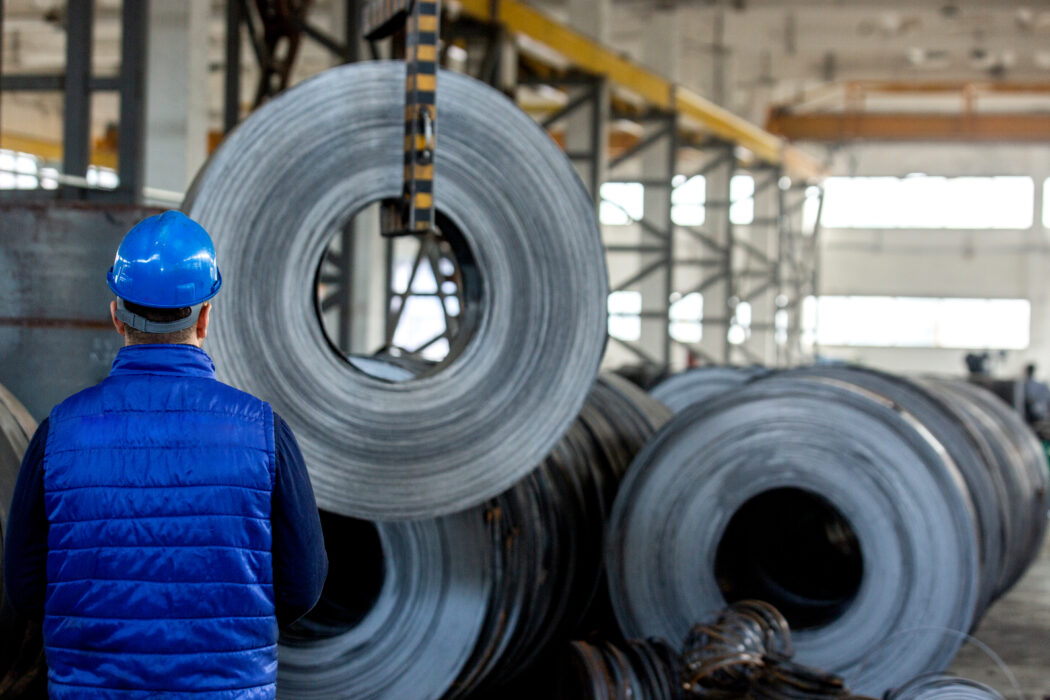
Modern steel manufacturing depends heavily on advanced rolling technologies to achieve precision, consistency, and high product quality. Among these technologies, the 4 Hi reversing mill plays a crucial role in producing steel plates and steel coils with accurate thickness, improved surface finish, and superior mechanical properties.
As steel industries continue demanding higher production efficiency and tighter dimensional tolerances, 4 Hi reversing mills have become an essential part of modern rolling operations. Their ability to process a wide range of steel grades and thicknesses makes them highly valuable for steel manufacturers worldwide.
Understanding the importance of 4 Hi reversing mills helps explain how modern steel plants achieve the quality standards required by construction, automotive, engineering, shipbuilding, and industrial sectors.
Index
What Is a 4 Hi Reversing Mill?
A 4 Hi reversing mill is a rolling mill configuration that uses four rolls arranged in two layers. Two smaller work rolls directly contact the steel material, while two larger backup rolls support the work rolls and prevent bending during the rolling process.
The term reversing refers to the ability of the steel plate or coil to pass back and forth through the rolling mill multiple times until the desired thickness is achieved.
Basic Configuration
- Two work rolls
- Two backup rolls
- Reversing rolling mechanism
- Precision thickness control systems
- Automated monitoring equipment
How a 4 Hi Reversing Mill Works
The rolling process begins by feeding a steel slab or strip between the work rolls. After each pass, the rolling direction changes, allowing the material to move back through the mill for additional reduction.
This repeated rolling process continues until the required thickness, flatness, and surface quality are achieved.
Rolling Process Steps
- Steel material enters the rolling stand
- Thickness reduction takes place during rolling
- Rolling direction reverses after each pass
- Additional reductions improve dimensional accuracy
- Final product reaches target specifications
Major Components of a 4 Hi Reversing Mill
Work Rolls
These rolls directly contact the steel and perform the thickness reduction process.
Backup Rolls
Backup rolls support the work rolls and maintain dimensional stability during rolling operations.
Drive System
The drive system controls roll movement and reversing operations.
Hydraulic Systems
Hydraulic equipment controls rolling pressure and thickness adjustments.
Automation and Control Systems
Modern mills use digital systems for monitoring thickness, flatness, and rolling performance.
Advantages of 4 Hi Reversing Mills
Excellent Thickness Accuracy
The rolling configuration allows manufacturers to achieve highly precise thickness control.
Improved Surface Quality
Repeated rolling passes create smoother and more uniform steel surfaces.
Greater Production Flexibility
Different steel grades and dimensions can be processed efficiently.
Enhanced Product Quality
The rolling process improves mechanical properties and dimensional consistency.
Reduced Material Waste
Precision control systems help minimize production losses and improve material utilization.
Industrial Applications
Steel Plate Manufacturing
Used extensively in the production of structural steel plates and industrial steel products.
Automotive Industry
High precision steel products manufactured using reversing mills are widely used in vehicle production.
Shipbuilding Industry
Marine steel plates require strict dimensional accuracy and excellent mechanical properties.
Construction Industry
Structural steel products for infrastructure projects often originate from advanced rolling mills.
Heavy Engineering
Industrial equipment manufacturers require steel products with consistent quality and performance.
Contribution to Steel Quality
The 4 Hi reversing mill significantly improves steel quality by controlling thickness variation, enhancing surface finish, and ensuring dimensional consistency.
These improvements help manufacturers meet international standards and customer specifications for critical industrial applications.
Quality Improvements
- Uniform thickness
- Better flatness
- Improved surface finish
- Enhanced mechanical properties
- Higher product consistency
Future of Rolling Mill Technology
The future of steel rolling technology includes greater automation, artificial intelligence integration, and digital process monitoring. These advancements will improve efficiency, reduce energy consumption, and further enhance product quality.
Steel manufacturers are investing heavily in smart manufacturing technologies to remain competitive in global markets.
Future Trends
- Artificial intelligence integration
- Smart manufacturing systems
- Advanced automation technologies
- Energy efficient rolling operations
- Digital quality control solutions
Conclusion
The 4 Hi reversing mill is one of the most important technologies in modern steel production. Its ability to deliver precise thickness control, excellent surface quality, and superior product consistency makes it essential for manufacturing high quality steel plates and coils.
As industrial requirements continue evolving, advanced rolling technologies such as 4 Hi reversing mills will remain critical to producing steel products that meet the highest international standards.
Manufacturers investing in modern rolling equipment are better positioned to deliver reliable steel solutions for construction, engineering, automotive, and industrial applications.
Looking for Premium Quality Steel Plates Manufactured Using Advanced Technology?
Namco Industries supplies high quality steel plates for construction, engineering, shipbuilding, manufacturing, and industrial projects across India.